

CVT vs. Automatic Transmission: What's the Real Difference?
If you've been shopping for a new Nissan, you've probably seen "CVT" listed as the transmission type and wondered how it compares to a traditional automatic. The short answer: they get you to the same place, but they do it very differently. For most drivers, that difference shows up as smoother acceleration and better fuel economy. Here's what's actually going on under the hood.
What Is a CVT Transmission?
A CVT, or Continuously Variable Transmission, doesn't use fixed gears. Instead of shifting between set gear ratios like a traditional automatic, a CVT uses a system of pulleys and a steel belt (or chain) that can adjust seamlessly across an infinite range of ratios. The result is a transmission that keeps the engine running at its most efficient RPM range no matter your speed. Your car won't step up and down through gears.
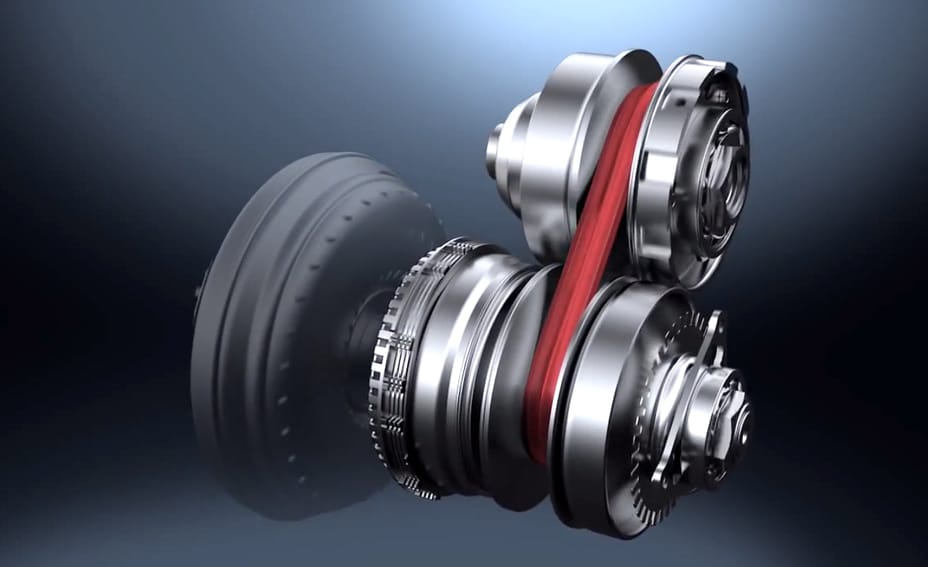
A traditional automatic transmission, by contrast, uses a set number of physical gears (typically 6, 8, or 9 in modern vehicles) connected through a torque converter. It shifts between these gears as you accelerate, which is why you feel distinct "steps" in power delivery.
CVT vs. Automatic Transmission: Key Differences
| CVT | Automatic | |
|---|---|---|
| How It Works | Belt-and-pulley system, infinite ratios | Fixed gears, torque converter |
| Driving Feel | Smooth, uninterrupted acceleration | Distinct shift points between gears |
| Fuel Economy | Typically higher, especially in city driving | Improved in modern 8–9 speed units, but generally trails CVT |
| Maintenance | Requires CVT-specific fluid on manufacturer's schedule | Standard transmission fluid service intervals |
| Best For | Daily commuting, fuel-conscious drivers | Drivers who prefer a traditional shift feel |
>>> Curious how a Nissan CVT feels on the road? Schedule a test drive.
Nissan CVT Transmission: What Makes Xtronic Different
Nissan has been refining its Xtronic CVT for more than 20 years, and it's one of the most widely used CVT systems on the road today. You'll find it in several of its core vehicles, including the Altima, Kicks, Murano, Rogue, and Sentra. Xtronic uses Logic Step Control, a feature that simulates the feel of traditional gear shifts during hard acceleration, giving drivers a more familiar response without sacrificing the efficiency benefits of a true CVT.
Starting in 2020, and more aggressively since 2022, Nissan rolled out significant hardware upgrades to Xtronic: reinforced pulleys and improved belt materials to handle stress loads, wider gear ratio ranges for better low-end torque and highway cruising, and upgraded cooling systems to manage heat more effectively. Every Xtronic CVT also comes backed by a 5-year/60,000-mile limited warranty covering CVT repairs, replacement, and related towing. It's separate from Nissan's standard powertrain coverage.
Are CVT Transmissions Reliable?
This is a fair question, and it deserves a straight answer rather than a sales pitch. CVTs earned a mixed reputation industry-wide through the 2000s and 2010s as manufacturers worked out early design issues, and Nissan's earlier Xtronic generations, largely in Altima, Rogue, and Sentra models from the mid-2000s through the late 2010s, saw a higher rate of complaints related to judder (jerky movement) and cooling.
Nissan responded by rebuilding the hardware and software from the ground up in newer generations, and the CVT-specific warranty reflects that shift toward standing behind the component directly. As with any transmission, CVT or otherwise, longevity comes down largely to maintenance: following the recommended fluid service schedule and avoiding sustained high-heat conditions (like heavy towing) goes a long way toward keeping any transmission, CVT or automatic, running the way it should.
>>> Related: The Ultimate Nissan Maintenance Checklist: Keep Your Vehicle in Peak Shape
CVT or Automatic - Which Is Right for You?
If your priority is fuel economy and smooth, effortless acceleration for daily driving, a CVT, like the Xtronic system in the Rogue or Sentra, is built for exactly that. If you prefer the more traditional feel of distinct gear changes, a stepped automatic may suit your driving style better. Either way, the best way to know which one fits you is to feel it firsthand.
>>> Ready to experience Xtronic CVT for yourself? Schedule your test drive at Coulter Nissan.
Frequently Asked Questions
What is a CVT transmission, in simple terms?
A CVT (Continuously Variable Transmission) uses a belt-and-pulley system instead of fixed gears, so it can adjust seamlessly across an infinite range of ratios rather than shifting between set steps. That keeps the engine in its most efficient RPM range and delivers power without the "steps" you feel in a traditional automatic.
Is a CVT the same as an automatic transmission?
Both are automatic in the sense that you don't shift manually, but the mechanics differ. A traditional automatic uses a fixed set of gears (typically 6–9) and a torque converter, shifting between them as you accelerate. A CVT has no fixed gears at all, just a belt and pulleys that adjust continuously.
What is Nissan's CVT called, and which models use it?
Nissan's CVT is called Xtronic, and it's used across the Altima, Kicks, Murano, Rogue, and Sentra lineups. It includes Logic Step Control, which simulates the feel of traditional gear shifts during hard acceleration for a more familiar driving response.
Are CVT transmissions reliable?
Modern CVTs, including current-generation Xtronic units, are built on significant hardware and software upgrades Nissan introduced starting in 2020 and more aggressively from 2022 on. The Xtronic has reinforced pulleys, improved belt materials, and upgraded cooling systems. Every Xtronic CVT is backed by a 5-year/60,000-mile limited warranty covering CVT repairs, replacement, and related towing. As with any transmission, reliability comes down largely to maintenance. Following the recommended fluid service schedule is the biggest factor in long-term performance.
Do CVTs get better gas mileage than traditional automatics?
Generally, yes. Because a CVT can hold the engine at its most efficient RPM regardless of speed, it typically delivers better fuel economy than a stepped automatic, especially in city and stop-and-go driving.
Does a CVT need special maintenance?
Yes, rather than standard automatic transmission fluid, a CVT requires CVT-specific fluid that should be changed on the manufacturer's recommended schedule. Staying on schedule is the single best thing an owner can do to protect the transmission long-term.